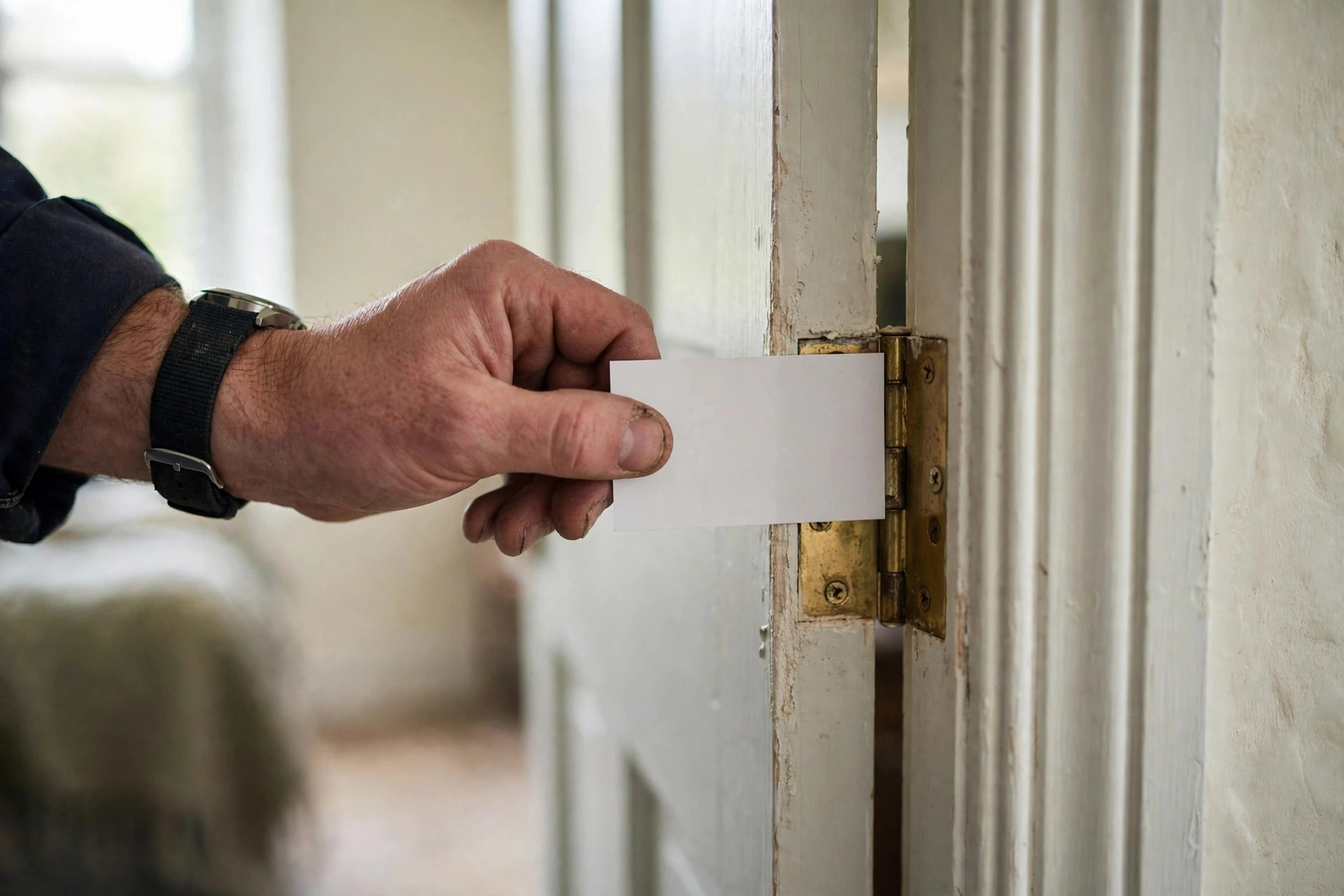
You push the bedroom door, it scrapes, then it bounces back open again. That daily irritation usually has a simple cause, and understanding why internal doors stick helps you fix the right thing first instead of planing wood you may later regret removing.
At East Coast Doors in Julianstown, County Meath, our fitters see the same patterns across Dublin, Meath and Louth homes every week. Loose hinges, swollen edges, tired latches and shifted frames all leave different clues, if you know where to look first.
This troubleshooting clinic works like a diagnosis. You match the symptom, test the likely cause, then choose the smallest safe fix. If the problem points to a worn door or frame, you will also learn when professional fitting becomes the sensible answer.
Why internal doors stick: start with the symptom, not the tool
A sticking door is a symptom, not a diagnosis, and treating it that way saves you time and timber. Professionals begin by watching the door move slowly, noting exactly where it touches, drags, clicks or stops before the latch can engage properly.
Rubbing at the top corner usually points towards hinge wear or a door dropping on its hinges over time. Rubbing along the bottom often suggests floor changes, swelling, or a door that was trimmed too tightly for thicker carpet or new flooring.
If the door closes fully but will not stay shut, your problem is probably alignment between latch and strike plate. That pattern belongs in the door latch problems category, not the swelling category, and it normally needs adjustment rather than sanding or planing.
A door that sticks only in winter or after wet weather is telling you something different again about moisture. Seasonal movement is common in Irish homes, and a door that frees itself in drier weeks rarely needs aggressive trimming in January.
Try the clinic test with a sheet of paper at several points around the closed door. If the paper grips hard at one spot and slides freely elsewhere, the gap is uneven and the tight spot deserves your attention first.
Look also at the paint and timber for witness marks, shiny patches and cracked coating along the edges. Those marks show repeated contact, and they often reveal the exact point where internal doors wont close cleanly or where handles get forced daily.
Once you have named the symptom clearly, the next step is to check the most common Irish cause of all, moisture in the home and moisture in the timber itself, before you blame hinges, latches or the frame around the door.
Moisture and seasonal swelling in Irish homes
Timber doors respond to the air around them, absorbing moisture in damp months and releasing it again when homes dry out. That natural movement can reduce a healthy gap to almost nothing, especially on bathroom, kitchen and utility room doors used daily.
Ireland has a mild and changeable Atlantic climate, and Met Eireann describes the climate of Ireland in detail for anyone wondering why homes feel damp for long parts of the year. Moisture indoors follows that wider pattern closely.
Showers, cooking, indoor laundry and poor extraction all raise humidity inside a house, even when the weather outside feels dry. When warm moist air meets cooler surfaces regularly, timber edges can swell gradually until a door begins to bind against its frame.
Ventilation is therefore part of door care, not a separate topic for another day or another trade entirely. SEAI explains why good ventilation matters for moisture control, comfort and the long term condition of Irish homes.
Before you trim a swollen door, run extractor fans properly, clear trickle vents and check for obvious condensation sources nearby. Give the door a few drier days if you can, because a fix made at peak swelling often creates unsightly gaps later.
Primed doors that were painted late, or edges left unsealed after trimming, can absorb moisture faster than fully finished doors. The top and bottom edges are easy to forget, yet sealing them properly helps a door stay stable through the changing seasons.
Moisture explains many seasonal cases, but it does not explain a door that dropped suddenly or creaks at one hinge. With swelling ruled in or out, you can now inspect the hinges, which carry the whole weight of the door every day.
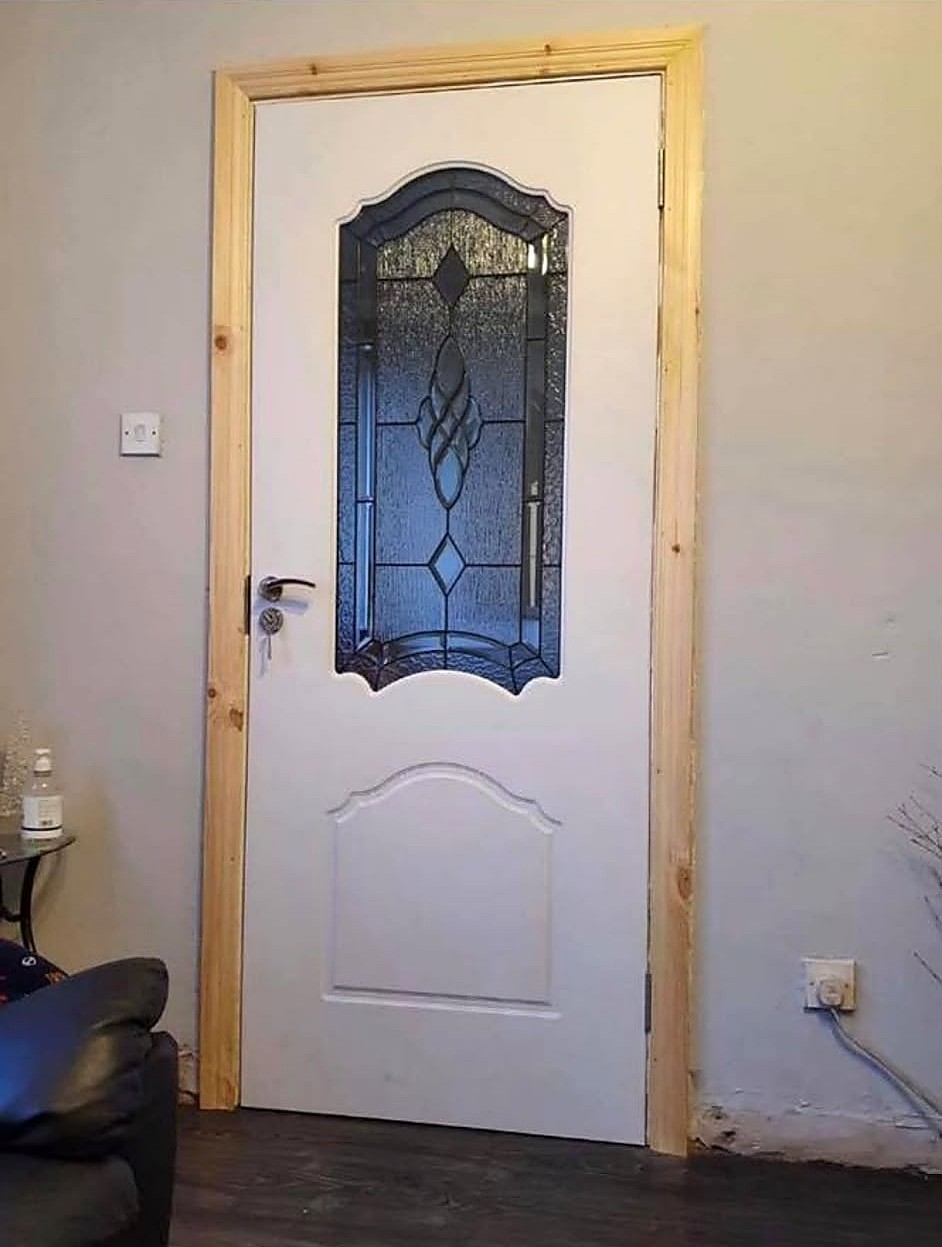
Hinges that drop, loosen or quietly pull away
Hinges do quiet, constant work, and small movement at a hinge creates a much bigger movement at the handle edge. A few millimetres of drop at the top hinge can make the opposite corner scrape, rattle or miss the latch completely.
Open the door halfway and lift the handle gently while watching each hinge for play or visible movement. If the door rises and the gap improves, you have found useful evidence that hinge wear or loose screws are driving the problem.
Check every screw with a hand screwdriver, turning slowly and feeling for screws that spin without biting into timber. Stripped holes are common in older frames, especially where heavier solid core doors have replaced lighter doors on original hinges and short screws.
Painted hinges can also deceive you, because thick paint hides cracks, loose pins and screws that sit slightly proud. A proud screw head can stop a door closing fully, leaving you with a springy feel that many homeowners mistake for warping.
Tightening helps only when the screw can grip sound timber underneath the surface of the frame. If holes are worn, a fitter may use longer screws into solid framing or repair the hole properly, rather than forcing larger screws and splitting timber.
Bent hinge leaves appear after doors are forced, leaned on by children, or caught suddenly by a strong draught. Compare both leaves when the door is open, and look for gaps that suggest the hinge no longer sits flat in its recess.
Our professional door fitters in Dublin check hinge condition before quoting any replacement, because many doors recover completely after correct hinge work. If your hinges pass these checks, attention should move naturally to the latch, handle and strike plate alignment next.
Latch trouble: when a door closes but will not stay closed
Door latch problems feel different from sticking, because the door often reaches the frame without much effort at all. You hear a click, let go of the handle, and the door drifts open again as if something invisible is pushing it back.
Watch the latch bolt as you close the door very slowly in good light from the side. It should meet the strike plate opening centrally, ride over the lip smoothly, then drop fully into the recess without lifting or dropping the door.
If the bolt hits below the opening, the door has probably dropped, which brings your diagnosis back to hinges. If it hits above, the frame or plate may have moved, or a replacement handle may have been fitted slightly out of position.
Old latch cases can also wear internally, leaving a bolt that looks fine but retracts unevenly or sticks halfway. Test it repeatedly with the door open, using the handle, and note any roughness, delay or failure to return fully each time.
Homeowners sometimes file the strike plate opening larger as a quick cure for misalignment problems at home. That can work for tiny movement, but repeated filing weakens the plate and hides a bigger hinge or frame issue that will keep progressing quietly.
For general lock and door hardware context, the Private Security Authority guidance on locks and building regulations is a useful official reference. It reminds owners that repairs should not reduce the compliance or security of an existing door.
Handles matter too, because loose roses, bent spindles and worn springs change how the latch behaves under pressure. When latch and hinges both test well, the next suspect is the frame itself and the floor levels that quietly support it underneath.
Frames, floors and the changes you forget you made
Many sticking door causes start away from the door leaf, in the frame, floor or finishes around it. New carpet, underlay, timber flooring or tiles can lift the effective floor level enough to make a previously perfect door drag at the bottom.
Think back to the last change in the room before the problem started to appear regularly. Fresh plaster, new skirting, extra paint, a replaced handle or a fitted wardrobe can all alter clearances slightly, and those small changes often explain sudden sticking.
Frames in older Irish homes may not be perfectly square, even when they look straight to the eye. Settlement, historic repairs and previous door swaps leave openings that suit one carefully fitted door, but not a new door hung without proper measuring.
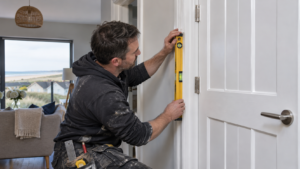
Use a long level or a reliable straight edge against the frame legs and head when checking. You are looking for twist, bow and obvious movement, not perfection, and comparing both sides usually shows where the opening has narrowed over time.
In homes across Drogheda, our team regularly sees sound doors blamed for frames that moved after flooring work. Homeowners exploring internal doors in Drogheda often start with exactly this problem, then discover the original frame needs attention before any new door will work.
A frame that is loose in the opening can move a little every time the door is pulled shut. Check for cracked paint at the architrave joints, movement when you press the frame, and gaps appearing behind skirting or along the wall edge.
Frames and floors explain contact at one point, but paint build up and warping explain contact that grows slowly everywhere. After checking the opening itself, you should examine the door leaf closely for coating, twist and changes in its own shape.
Paint build up, warping and the door itself
Every repaint adds a thin layer, and after several coats the edges of a door and frame grow closer together. The result is a door that binds softly, leaves paint marks, and sometimes sticks more on humid days than it did before painting.
Paint that bridges the gap between door and frame can tear, roll or form a ridge that acts like glue. Look for uneven coating on the closing edge, drips in the corners, and paint on hinge leaves that prevents them closing flat.
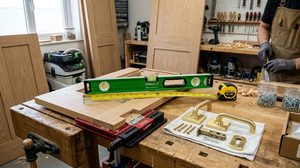
Warping is different, because the door itself is no longer flat when checked against a straight edge. Hold a straight edge diagonally and vertically, and look for daylight, rocking, or one corner sitting away from the frame when another corner touches.
A mildly warped hollow core door may never return to a reliable, quiet close, however carefully you adjust hardware. Heavier solid doors resist some movement better, but poor storage before fitting or unbalanced finishing on both faces can still encourage twist.
Replacement doors need correct storage, acclimatisation and finishing, which is why product standards and competent supply matter so much. The National Standards Authority of Ireland provides the standards framework that supports quality building products and consistent workmanship across Irish construction generally.
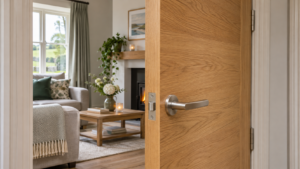
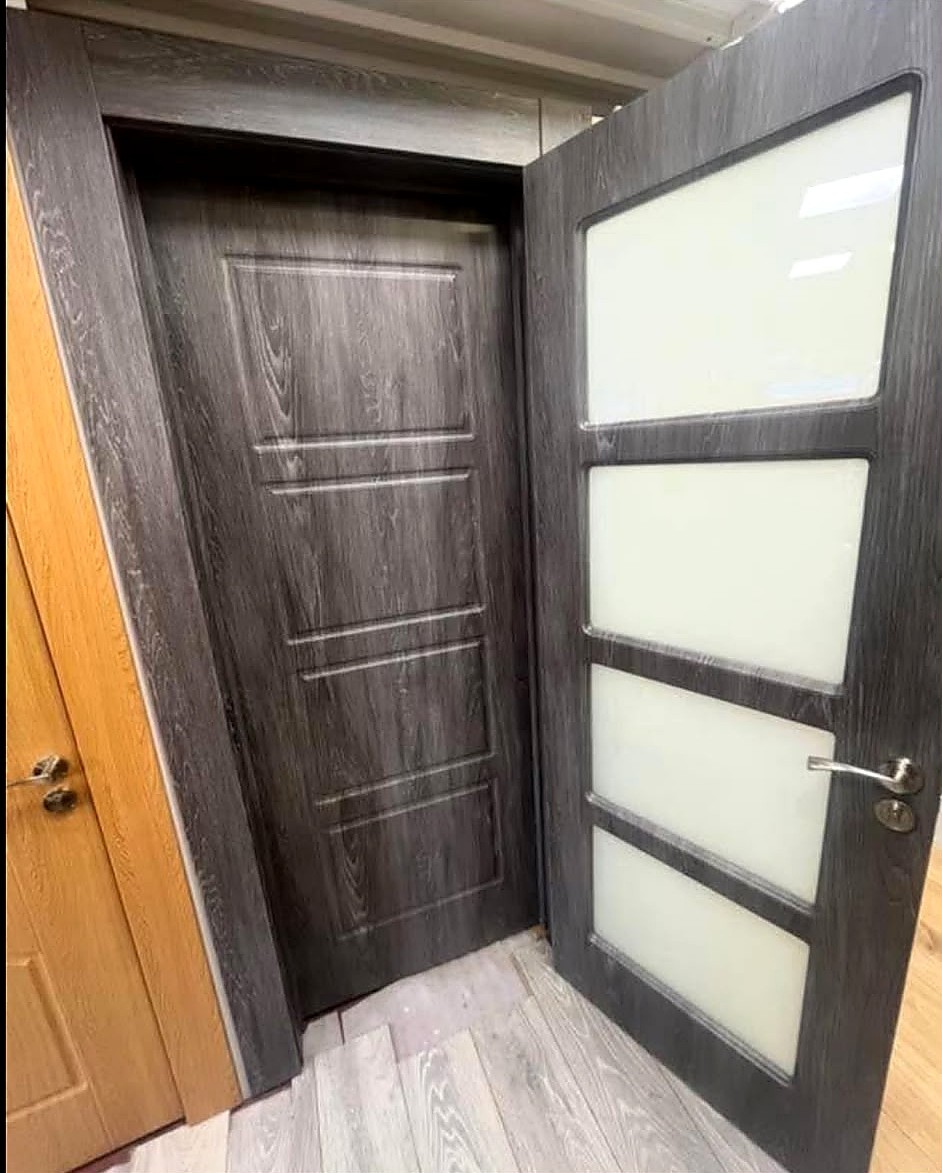
If you are comparing replacement styles after a warped door, browse the full range with clearances in mind. You can view our complete internal door range to see white primed, pre finished, oak and slate grey options suited to different Irish homes and rooms.
Paint and warping are visible once you know how to test for them properly at home. Knowing the cause is only half the clinic, though, so the next section sets out safe fixes in the order professionals usually try them.
Safe fixes to try, in the order professionals use
Start with cleaning, because grit, dried paint and household dust in the latch and hinge areas cause surprising friction. Wipe the edges, vacuum the strike recess, test the handle, then close the door slowly to see whether the symptom has already changed.
Next, tighten hinge screws by hand, support the door if needed, and retest after each small adjustment you make. Working in small steps protects timber and helps you learn which change actually improved the close, rather than guessing afterwards what worked.
A tiny strike plate adjustment can restore a clean latch when the door itself closes without rubbing anywhere. Mark the current position in pencil first, move only slightly, and keep checking that the bolt enters fully without forcing the handle down hard.
For light rubbing caused by paint, careful sanding of the paint ridge alone may be enough to restore clearance. Protect the surrounding finish, work gently, then seal or repaint the exposed edge so moisture does not enter the timber afterwards again.
Planing belongs near the end of the list, after hinges, latch, moisture and frame movement have been checked. Remove the smallest amount possible from the correct edge, test frequently, and remember that timber removed in winter cannot be replaced in summer.
Correct measuring prevents most repeat problems when a door or frame has reached the end of adjustment. Our free door measuring service checks the opening, floor levels and hardware positions before supply, so a replacement door arrives ready for accurate fitting at your home.
Those steps solve many everyday cases when the underlying door and frame are still sound and stable. Just as important is knowing which popular shortcuts create bigger bills later, and that is exactly where the clinic turns in the next section.
Shortcuts that make a sticking door worse
Forcing a sticking door shut every day feels harmless, but it stresses hinges, loosens screws and cracks paint around the frame. Over time, a small clearance problem becomes a hardware problem, then a frame problem, because every forced close moves something else slightly.
Slamming is even harder on latch cases and strike plates, especially in family homes with busy hallways and bedrooms. If children need to slam a door to keep it shut, the door is asking for diagnosis, not more force from everyone.
Removing large amounts from the bottom of a door is another common and expensive mistake at home. It can create a gap that affects privacy, sound and draughts, and it may still miss the real cause if the top hinge is dropping.
Swapping to stronger hinges without checking the frame can also transfer stress into weak or damaged timber. Good fitting matches hinge, screws and door weight as a system, which is covered in our guide to internal door installation in Ireland for homeowners planning proper replacement work.
Petrol based lubricants and random sprays rarely fix mechanical misalignment, and they can stain paint or attract dust in latches. A clean, correctly aligned latch usually needs no lubricant at all, while a worn latch needs repair or replacement, not repeated spraying.
Ignoring a bathroom door that sticks can trap moisture in the room and make swelling worse each week. Met Eireann explains what it measures for humidity and rainfall, a reminder that Irish indoor moisture sits within a naturally damp climate context.
Avoiding these shortcuts keeps a repairable door repairable for longer and protects the frame around it too. There still comes a point where adjustment runs out, and recognising that point early will save you repeated weekends of temporary fixes at home.
When repair runs out and replacement makes sense
Replacement makes sense when the door is warped, split, swollen repeatedly, or too small after previous trimming work. It also makes sense when you are changing flooring throughout, because new levels and finishes give you one clean chance to set clearances properly.
If several doors in the house share the same tired style and the same hardware problems, a planned whole house approach can be better value. Matching doors, handles and hinges gives every room a consistent close and a calmer, more finished feel throughout.
Fire safety, privacy and accessibility should also shape the decision where they apply to your household. A door that cannot close reliably cannot do its everyday job properly, and any specialist requirement should be checked before you choose a replacement door.
For Swords homeowners weighing repair against renewal, seeing local supply and fit work helps ground the decision. Our page on internal doors supplied and fitted in Swords shows how measuring, supply and fitting come together as one managed service for busy households.
A good replacement process starts before anyone lifts a tool, with sizes, swings, floor levels and handle positions recorded. That is why experienced door fitters in Dublin measure first, advise on style second, and only then order doors that suit the actual openings in your home.
East Coast Doors supplies and fits with its own team, rather than handing your home to unknown subcontractors later. From our Julianstown base we cover Dublin, Meath, Louth and wider Leinster, keeping measuring, supply and fitting under one accountable roof for customers.
Replacement is not failure, it is often the point where a house starts working properly again every day. Before you decide, though, it helps to see how a professional fitter diagnoses the same door in one structured visit to your home.
How a fitter runs this clinic in your home
A professional visit starts with listening, because when the problem began and when it feels worst are diagnostic facts. The fitter then cycles the door slowly, checks gaps, tests hinges and latch alignment, and inspects the frame for movement or damage carefully.
Measurements follow, including opening width and height, door thickness, floor levels and the position of existing hardware on the door. Those details decide whether adjustment, hardware renewal, frame repair or a new door offers the most honest value for your home.
You should expect plain advice about what can be saved and what cannot be saved responsibly. Our wider complete guide to internal doors in Ireland explains styles, cores and finishes, helping you connect a repair decision today with better buying choices for the future.
Common questions about sizes, fitting and aftercare are answered before work begins, not after problems appear later. Many homeowners find our internal doors frequently asked questions useful before booking, because they clarify what supply and fit includes and what information helps a measuring visit run smoothly.
Across Ireland, good fitting practice is built on measuring twice and cutting once, as older carpenters still say. Reading how to choose reliable door fitters in Ireland will help you judge quotes, questions and promises from any company you invite into your home this year.
At East Coast Doors, that clinic approach is personal, because our own team does the measuring and the fitting. We would rather tighten, adjust or save a sound door than sell you a replacement that your home does not actually need yet.
With a clear diagnosis, a safe order of fixes and honest limits in mind, you are ready for quick answers. The questions below cover the concerns homeowners in Dublin, Meath and Louth ask us most often about sticking and latching doors.
Frequently asked questions about sticking doors
Why does my door stick in winter but not in summer?
Seasonal sticking usually points to moisture, because timber absorbs humid air in wetter months and expands slightly into the frame gap. Improve ventilation, run extractor fans, check unsealed edges, and avoid planing until drier weather shows how much movement is truly permanent.
Can a loose hinge really stop a door closing properly?
Yes, a loose top hinge lets the door drop, so the handle edge scrapes and the latch bolt misses the strike plate opening. Tighten screws by hand first, check for stripped holes, and support the door while testing the improvement after each adjustment.
Should I plane a door that wont close?
Plane only after checking hinges, latch alignment, moisture, paint build up and frame movement, because planing removes timber permanently and cannot be reversed later. If you do plane, remove tiny amounts from the correct edge, test often, and seal the exposed timber afterwards.
Why does my door close but then pop open again?
That pattern usually means the latch bolt is not entering the strike plate fully, or the internal latch mechanism has worn with age. Watch the bolt in slow motion, compare its height with the opening, and check the handle and spindle for looseness.
Can new carpet or flooring make a door stick?
Yes, new carpet, underlay, tiles or timber flooring raise the finished floor level, reducing clearance under a door that previously moved freely. Check for drag marks at the bottom edge, test with the door over a hard surface, and measure before trimming anything.
When should I call a fitter instead of trying more fixes?
Call a fitter when the door is warped, the frame moves, screw holes will not hold, or several adjustments have failed to hold. A professional can measure accurately, repair the real cause, and advise honestly whether replacement offers better long term value.
Those answers cover the quick cases, but a door that still fails after checking deserves hands on measuring before more cutting begins. That is why the final step is simple: get the opening checked properly, then choose repair or replacement based on evidence gathered.
Get a door that closes properly, without the guesswork
If your door still sticks after these checks, book a free home measuring visit and get a clear answer. Call East Coast Doors on 083 814 7923, and our own team will measure, diagnose and advise without pressure to replace unnecessarily.
You can also contact East Coast Doors to arrange your visit at a time that suits your household and work schedule. We cover Julianstown, Dublin, Meath, Louth and wider Leinster, supplying and fitting doors that close properly first time.
Do not live with forcing, slamming and guessing for another season in your own home. Book the check, learn why internal doors stick in your house specifically, and enjoy doors that close quietly, latch cleanly and feel right every single day.