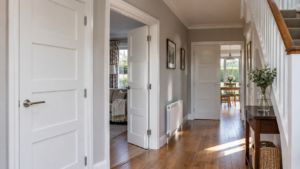
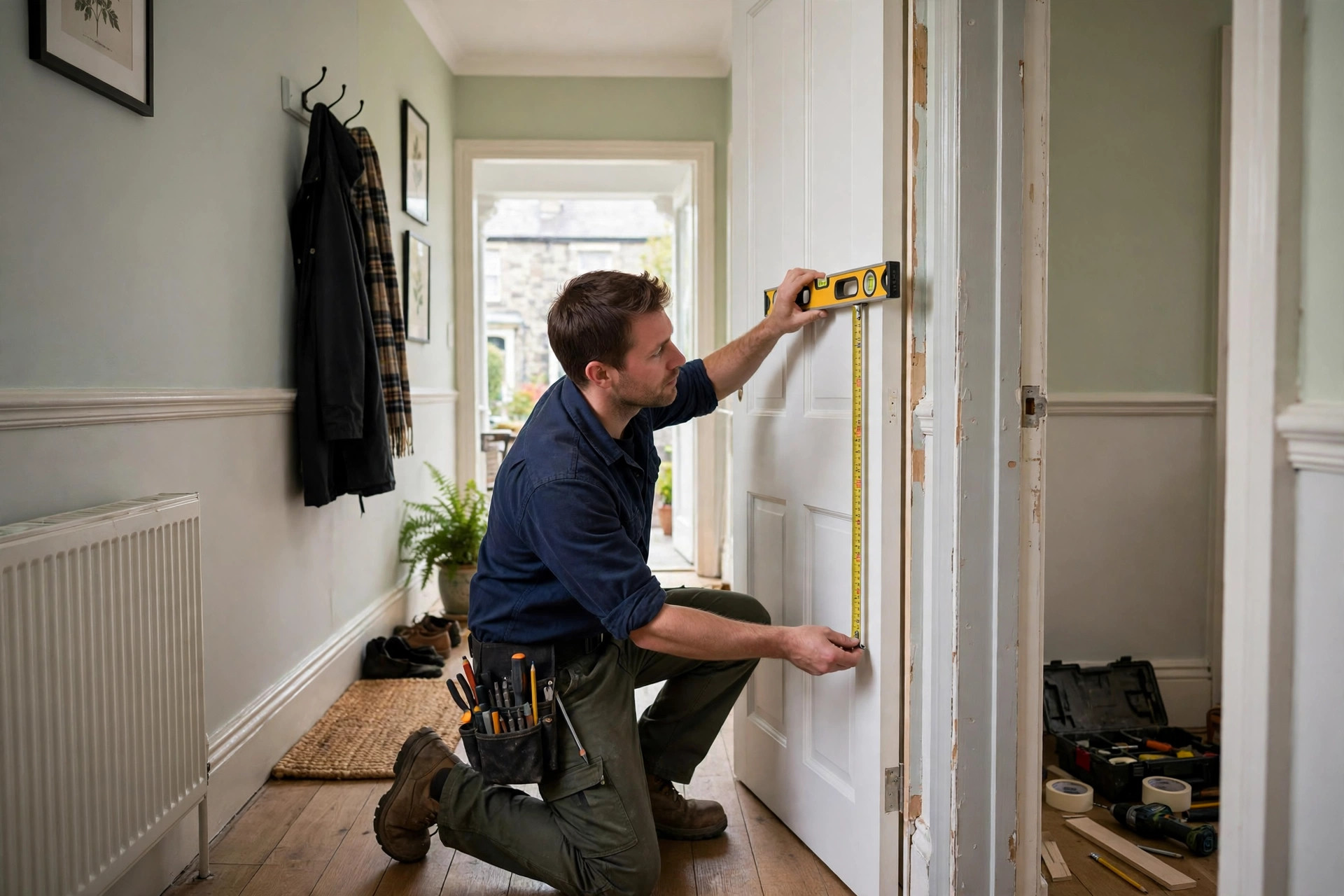
Yes, in many Irish homes you can replace internal doors without replacing frames, and keep sound walls, architrave and flooring intact. The answer depends entirely on the condition, shape and size of the frame you already have.
A straight door swap sounds simple until you meet a twisted jamb, a worn hinge side or an opening that was never square. Fitters see those small faults every week across Dublin, Meath and Louth housing estates.
This guide works like a home diagnostic. You will check your own frames in minutes, read three common house cases, learn correct measuring, and know exactly when keeping a frame saves money and when it causes trouble.
When You Can Replace Internal Doors Without Replacing Frames Safely
Start with the frame, not the door catalogue. A new slab can only close cleanly, latch softly and sit evenly if the frame gives it a true, firm and stable home on all four sides.
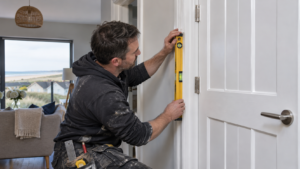
Work room by room with a torch, a tape, a long spirit level, a bank card and a notebook. Open and close each door slowly, watch the gaps, and write down anything that moves, rubs or rattles.
- Frame feels solid when pushed firmly at hinge side and lock side, with no spring or movement.
- No soft, dark or crumbling timber when you press a small screwdriver gently into hidden lower corners.
- Hinge jamb sits plumb, checked with a level on its face and on its inner edge.
- Head jamb looks level, and both top corners still form a clean, near square angle.
- Gap around the closed door looks even, roughly two to four millimetres on sides and top.
- Existing door has not been cut heavily at one corner to force an uneven fit.
- Latch bolt meets the keep centrally, without lifting, dropping or forcing the handle.
- Architrave sits tight to the wall, with no wide cracks opening behind its edges.
- Floor level under the door has not risen above the planned clearance for new flooring.
- No signs of past water damage near bathrooms, kitchens, utility rooms or exterior walls nearby.
Score each opening as you go, rather than judging the whole house from one good doorway. In most homes, hallway and bedroom frames behave well, while bathroom and utility frames carry the hidden moisture history.
Take photographs of damaged corners, hinge pockets and latch keeps before you order anything. Clear photos help a fitter judge a frame honestly from a first call, and they stop guesswork later on fitting day.
If most checks pass, keeping the frame is usually the sensible route. If several checks fail on the same opening, pause there, because the next section shows how to read green, amber and red results.
Reading Your Results: Green, Amber and Red Frames
A simple traffic light system keeps the decision calm and practical. It stops you rejecting a frame for one cosmetic mark, and it also stops you trusting a frame that will fight every new door.
Green frames you can trust
A green frame is solid, dry, plumb and square enough for normal trimming. Its hinges carry weight without creaking timber, its latch side stays firm under pressure, and its painted surface may look tired without hiding faults.
You can order standard door sizes for green openings with confidence, allowing your fitter a small, even trim. Keep the old door until fitting day, because its hinge positions and handle height provide a useful template.
Amber frames that need skilled adjustment
An amber frame has one clear issue, such as slight twist, a loose hinge jamb, local paint build up or a latch keep sitting off centre. None of those faults automatically means removal, but each needs skill.
Professionals can pack a hinge, deepen a pocket, refit a keep, plane a high spot or strengthen a split with glue and screws. Those repairs work when the surrounding timber remains dry, thick and structurally sound overall.
Red frames that will cause repeat problems
A red frame moves, crumbles, leans badly or has been cut and patched in several places already. Fitting a quality new door to it wastes labour, because gaps, sticking and latch faults return within weeks of use.
Rot at the base, a badly bowed jamb and a head that drops toward one corner are classic red signs. Once you can spot the colour of each frame, real house examples make those judgements far easier.
Three Irish Home Patterns We See Again and Again
Houses rarely fail in dramatic ways. They fail in familiar patterns linked to age, heating, flooring and past decorating, and recognising your pattern tells you what to expect before anyone lifts a tool in your hallway.
Case one: a settled semi with sound but dated frames
A typical three bed semi in Dublin may have original frames that still stand firm after decades of family use. The doors look dated and have been painted many times, yet the openings remain surprisingly square and consistent.
For homes like this, our team often fits new doors across the house while keeping every frame. Work stays cleaner, rooms return to use quickly, and homeowners exploring internal doors in Dublin homes get a fresh look without rebuilding openings.
The main work is careful trimming, fresh hinge pockets and patient latch alignment. Paint build up on the frame stop must be checked, because thick layers can steal the few millimetres a new door needs to close.
Case two: a newer Meath home with one twisted frame
Newer homes can hide a different problem. Most frames pass easily, but one bedroom frame may have twisted as the house dried out, leaving the top corner proud and the bottom corner sitting back noticeably.
That single amber opening needs a honest conversation. Sometimes a fitter can hang the door to follow the twist slightly, and sometimes the better answer is replacing that one frame while keeping the rest throughout the house.
Homeowners looking at internal doors for Meath properties often choose that mixed approach. It protects the budget, avoids unnecessary work in good rooms, and fixes the one opening that would annoy them daily for many years to come.
Case three: a Louth rental with wear in wet rooms
In a busy rental, hallway and bedroom frames may be green while the bathroom frame tells another story. Steam, splashes and poor ventilation soften lower timber, loosen paint and leave the bottom of the jamb feeling spongy.
Fitting a new bathroom door to soft timber rarely lasts. The hinge screws lose grip, the door drops, and the tenant soon reports sticking, which is why wet room frames deserve the strictest check in any house.
For planned upgrades, landlords comparing internal door options across Louth usually replace that one damaged frame and keep the rest. With your pattern clear, accurate measuring becomes the step that protects everything else in every single room.
Measuring an Existing Opening Without Guesswork
Good fitting starts long before the new door arrives. Measure the frame itself, not the old door alone, because old doors may have been planed unevenly over years to follow faults you do not want repeated.
Open the door and measure width between the inner faces of both jambs at top, middle and bottom. Write all three numbers down, circle the smallest, and use that figure as your working width for ordering.
Measure height from the underside of the head jamb to the finished floor surface at both sides and in the middle. If new flooring is planned, allow for its thickness, underlay and any transition strips.
Check the frame depth and the position of the door stop, the thin strip that the door closes against. A deeper or shallower replacement door must sit correctly against that stop, or the latch and draught behaviour change.
Note the hand of each door, which side the hinges sit on and which way it opens into the room. Photograph each opening with its room name, because a full house order can look confusingly similar later.
This is exactly why our free door measuring service for homes checks every opening individually before supply. One visit records width, height, swing, floor levels and frame condition, so no door is ordered from a hopeful average.
If you want to know what happens during that visit, reading about what to expect from free door measuring will settle most nerves. With true sizes recorded, hinges and latches become the next make or break detail.
Hinges, Latches and Handles on an Older Frame
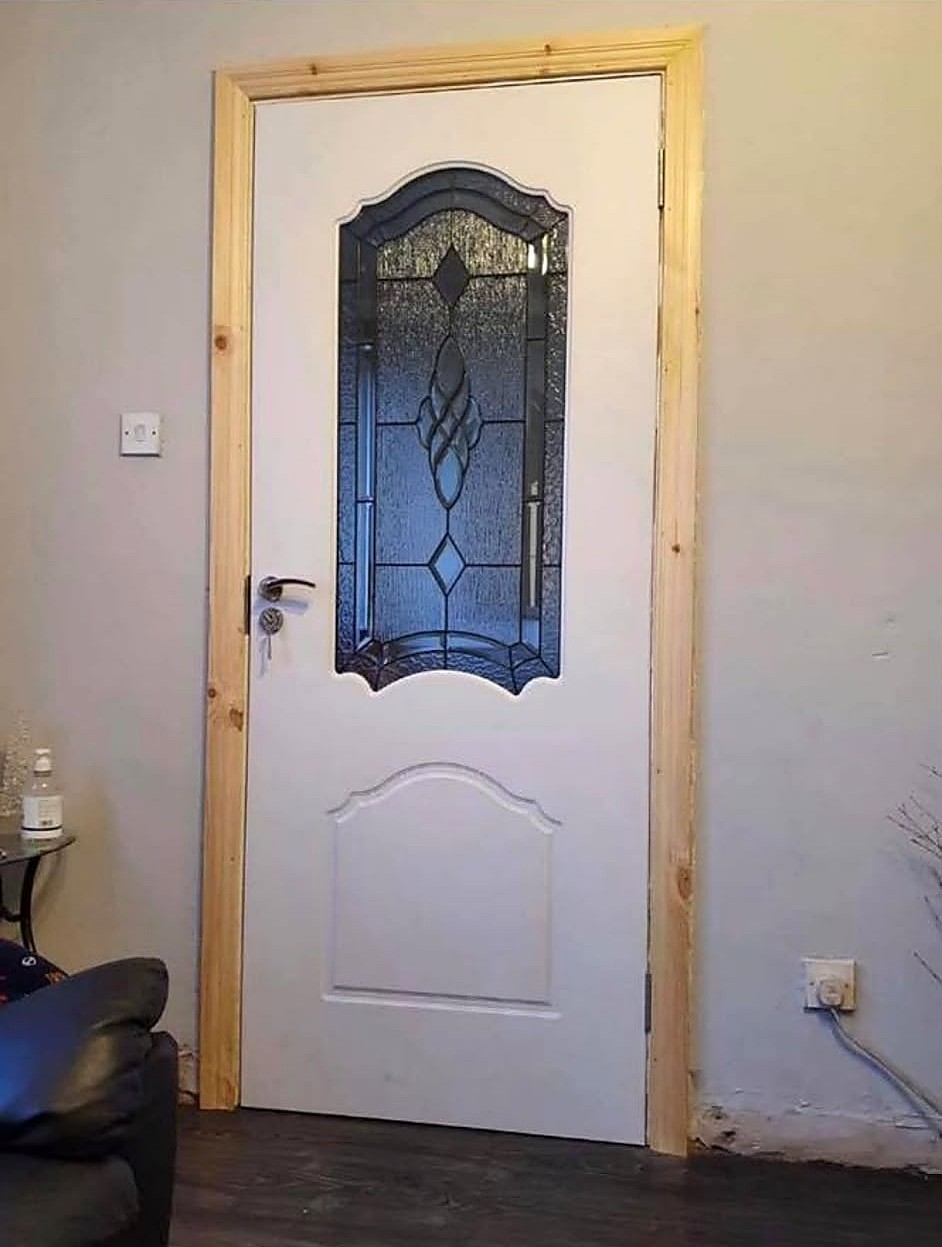
Hardware is where an old frame either welcomes a new door or quietly resists it. Hinge pockets may be shallow, split or in the wrong place, and latch keeps rarely line up perfectly by luck alone.
Compare the hinge positions on the old door with the weight and construction of the new one. Heavier solid core styles need sound screw ground, and worn pockets must be repaired before they can carry that load.
Never hang a heavy door from a few short screws into tired timber. Professionals use suitable fixings, pack split pockets, and sometimes move a hinge slightly to reach firm wood that will hold for years of use.
Check handle height against other doors in the hallway. Keeping handles level across a landing looks calm and intentional, while one door with its handle noticeably higher will catch your eye every single day afterwards.
Test the latch action before final decoration. The bolt should enter the keep smoothly without you lifting the door, pressing your shoulder into it, or slamming it harder than you would on a quiet night.
For awkward openings, experienced door fitters working in Dublin will adjust the keep, hinge packing and door edge together as one system. Once the hardware logic makes sense, the actual fitting sequence feels far less mysterious.
How Professionals Fit a New Door to an Old Frame
A careful fitting follows the same calm order on every opening. Rushing any stage pushes the problem into the next one, until a small error at the hinge side becomes a visible fault at closing.
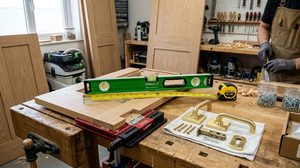
First, the fitter offers the new door into the opening and marks where it touches. High spots are planed in small passes, the door is tried again, and that patient cycle repeats until gaps look even.
Next, hinge pockets are cut or adjusted to match the frame, and the door is hung and swung through its full arc. Only then are latch and handle holes drilled, using the frame keep as reference.
Following a proven internal door installation process in Ireland keeps that sequence consistent from first door to last. It also means architrave, stops and walls stay protected while heavy doors move through tight hallways and stair turns.
At East Coast Doors Ireland, our own fitting team works from Julianstown across Leinster, and we supply and hang the door as one job. That joined up responsibility matters when an opening needs a judgement call mid fit.
Finally, the fitter checks the door at morning light, from both sides, at handle height and at floor level. When that process is done well, the only remaining question is when a frame crosses the line.
When the Honest Answer Is a New Frame
Keeping a frame is a means to a good result, not a rule to defend at any cost. Some openings need a new frame and lining before any door can hang straight, seal well and stay reliable.
Replace the frame when timber is rotten, when the jamb is split along the hinge line, or when movement returns after firm tightening. Those are structural faults, and surface repairs only delay the same conversation by months.
Replace it also when the opening is badly out of square and the new door would need an extreme, visible taper. A slightly tapered top can look discreet, but a wedge shaped door shouts its problem daily.
Fire safety can change the decision in certain homes and conversions. Official building standards guidance the Irish Government published explains why some doors and frames are treated as a tested system together, not separate parts.
In apartments, duplexes and homes with garage doors opening into the hall, ask specifically about fire rated requirements before reusing anything. Rules vary by building and use, so a site specific check always beats general online advice.
A good supplier will tell you plainly when replacement is the better spend, even though keeping frames is the easier sale. That honesty leads naturally into comparing real cost, time and disruption between both routes.
Bathrooms, Bedrooms and Kitchens Need Extra Judgement
Not every room asks the same job from a door. Moisture, sound, privacy and heat all change what a good fit looks like, and an old frame in a dry bedroom may outlast one in steam.
In bathrooms, check the bottom of both jambs and the threshold area first. Ventilation matters too, and guidance that homeowners reviewed on the SEAI home upgrades hub shows how moisture control protects the wider fabric of a home over time.
For bedrooms, pay attention to sound and light leaking around the frame. A well hung heavier door on a sound frame can improve privacy noticeably, while a poor perimeter gap will undo much of that benefit.
Kitchens bring heat, cooking moisture and constant traffic. Check that the door clears appliances, bins and flooring changes through its swing, and confirm the latch holds against the draughts created by extractors and open windows.
Utility rooms deserve the bathroom treatment, especially around washing machines that have leaked in the past. Look under lino and behind skirting, because the frame base often records a leak long after the floor dries.
Treat each room on its own evidence and you will rarely make a bad call for each doorway in the house. With room risks covered, you can weigh the money and disruption with a much clearer head.
Cost, Time and Disruption: Keeping Frames Versus Replacing Them
Keeping sound frames usually reduces labour, plaster repair, painting and waste. You avoid opening walls, removing architrave and making good around a new lining, which is where much of the hidden cost and mess lives.
A single door swap on a green frame can often be completed in a few hours by a skilled fitter. A frame replacement turns the same opening into a longer job with follow on decorating almost guaranteed.
Across a full house, that difference grows quickly. Keeping eight good frames can save days of work, while replacing one red frame adds a focused cost that protects the finish of that particular doorway for years.
For realistic figures, compare your quote against a current guide to internal door fitting costs in Ireland before you commit. Ask every supplier to separate door, hardware, fitting, frame work and decorating in writing before any work begins.
Understanding what a proper supply and fit internal doors service includes helps you compare like with like, fairly and clearly. The cheapest quote often excludes trimming, keeps, handle fitting or disposal that another quote includes.
Budget for handles, latches and hinges as part of the job, not as an afterthought at the till. Once the numbers are clear, choosing a door style that suits your existing frames becomes the enjoyable part.
Choosing New Doors That Suit Existing Frames
Your frame condition and opening sizes should shape your shortlist, not limit your taste. Standard sizes trim well into most green frames, while very unusual openings may need a style that tolerates careful resizing better.
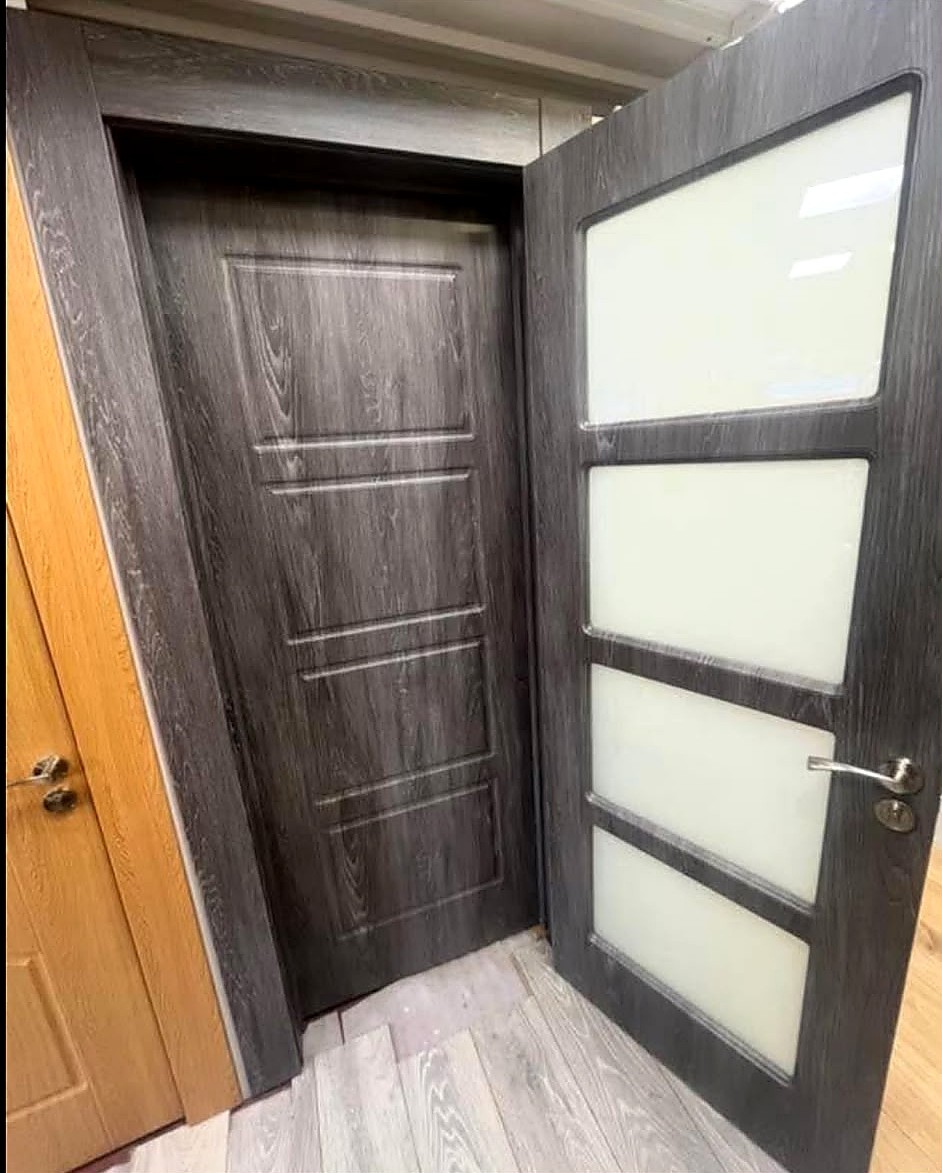
Browse the full range of internal doors available to browse with your measurements beside you. White Primed suits homeowners who want a colour finish, while White Pre Finished gives a clean, ready to enjoy surface.
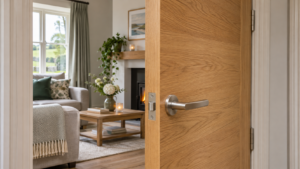
Oak Pre Finished and White Oak styles bring warmth to hallways that receive little natural light, and they pair well with existing painted architrave. Slate Grey creates a stronger contrast in modern extensions and renovated apartments.
Ask how much can be trimmed from each edge before you fall for a design. Standards work published through the National Standards Authority of Ireland website reminds buyers that certified products carry defined limits, tolerances and fitting instructions worth respecting.
Glazed styles deserve a swing and sightline check. Stand where the door will open, picture light moving between rooms, and confirm furniture, radiators and bannisters will not clash with the door through its full travel.
Pick the door for the opening you have, and the result will look designed rather than forced. Before you order, a final run through the common mistakes will protect that good choice from the first fitting day onwards.
Mistakes That Turn a Simple Swap Into a Difficult Job
The most common mistake is ordering from the old door size alone. Old doors carry years of planing, swelling and shortcuts, so copying them exactly can import yesterday problems into a brand new door order.
The second mistake is ignoring floor changes. New carpet, tiles or timber flooring raise the surface under the door, and a door trimmed for the old floor will drag, mark and frustrate you every day.
Homeowners also underestimate paint build up on frames in older houses. Layer upon layer narrows the opening and changes the stop position, which is why the consumer advice the CCPC published for home improvement work stresses checking existing conditions carefully before you agree to any job.
Reusing weak hinges and worn latches on a heavier new door is another false saving. Fresh hardware costs little beside fitting labour, and it gives the door the smooth, quiet action you expected from upgrading.
Site safety matters during fitting too, especially with power planers and heavy slabs on stairs. The precautions that specialists outlined on the Health and Safety Authority site apply just as much to a busy family hallway.
Avoid those five errors and most door swaps stay refreshingly uneventful. That brings us to the decision itself, and how to make it with confidence for your own home and for everyone living in your home.
Conclusion: Keep Good Frames, Replace Bad Ones
You now have a fitters way of judging any opening in your home. Check solidity, dryness, plumb, square, gaps and hardware, score the frame honestly, and let that evidence decide rather than hope or habit alone.
For most settled Irish homes, the answer is reassuring. You can replace internal doors without replacing frames in the majority of rooms, keep disruption low, and still achieve the clean, quiet close of a new installation.
Where a frame is rotten, twisted or badly out of square, replacing that one frame protects your spend. A mixed plan, new doors everywhere and new frames only where needed, is often the smartest route of all.
Take your notebook, work through one hallway this evening, and mark each frame green, amber or red. That small first step turns a vague upgrade idea into a clear plan you can act on this week.
Frequently Asked Questions
Short answers to the questions homeowners ask us most are below. For anything more specific to your house, our internal doors frequently asked questions page covers sizing, styles, fitting and aftercare in more detail for Irish homes.
Can any new door fit my existing frame?
Most standard doors can be trimmed to fit a sound existing frame, provided the opening is reasonably square and the door allows enough trimming on each edge. Unusual sizes, heavy tapers or glazed designs need a fitter to confirm first.
How do I know if my frame is rotten?
Press a small screwdriver gently into hidden lower corners and behind hinge pockets. Healthy timber resists and feels firm, while rotten timber feels soft, crumbles easily or smells musty. Dark staining and peeling paint at the base are warning signs.
Will keeping my frames save much money?
Usually yes, because you avoid removing architrave, making good plaster and repainting around a new lining. Savings grow across a full house, although one rotten or twisted frame is still worth replacing to protect the new door.
Can a twisted frame be fixed without replacing it?
A slight twist can sometimes be managed by packing hinges and hanging the door to suit the frame. Severe twist forces a visible compromise in gaps and closing, so replacement becomes the better long term answer in those cases.
Do I need to change hinges and handles too?
Fresh hinges and latches are strongly recommended, especially when the new door is heavier than the old one. New hardware improves closing, security of fixings and handle action, and it costs little compared with the overall fitting labour.
How long does a door only replacement take?
A skilled fitter often completes one straightforward door swap in a few hours, including trimming, hanging and fitting handles. Amber frames, floor changes or several doors in one visit will extend the schedule, which your measurer should outline clearly.
Those answers cover the common cases, but your frames deserve a judgement based on your own openings. The final step below shows how to get that judgement in person, free and without obligation, at a time that suits your household.
Book Your Free Home Measuring Visit
Still unsure about one stubborn frame? Book a free home measuring visit and let our own team check, measure and score every opening for you. Call us on 083 814 7923 to arrange a time that suits.
East Coast Doors Ireland supplies and fits across Dublin, Meath, Louth and wider Leinster from our Julianstown base. You can also send your questions through our contact page for East Coast Doors and we will reply with clear next steps.
Doors that close softly, latch cleanly and lift your hallway are closer than you think. Make the call today, keep the frames that deserve keeping, and enjoy a home that feels finished every time you walk through it.
If you would like the work done for you, see our internal door replacement service.