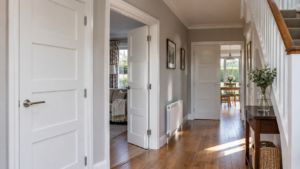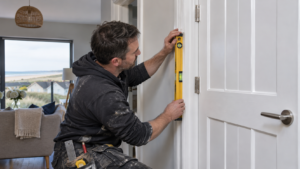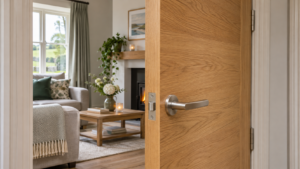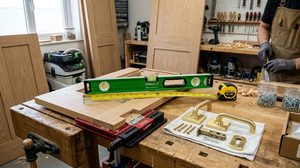
Internal doors are used every day, so wear shows sooner than many people expect. A door that once closed cleanly can start to stick, rattle or look out of place. The eight signs are sticking, warping, damage, gaps, noise, light leaks, a dated style and doors that no longer match after a renovation.
This guide works through each sign in plain terms. It also helps you decide between repair and replacement, and it explains what a full house replacement involves in Ireland.
Doors that stick or will not close
A door that sticks is often the first sign of a problem. It may catch on the frame, need a push to close or refuse to latch. Humidity, a settled frame and a door that has swollen slightly can all cause this fault.
One sticking door can sometimes be eased by a small adjustment. When several doors stick, or when the same door keeps sticking after adjustment, the doors or the frames may be past their best. A home measure will show if the openings are still square and if the frames are still sound.
Warped or damaged doors
Warping means the door no longer sits flat in the frame. You may see a bow along the edge or a corner that stands away from the frame. Damage is easier to spot. Look for cracks, chips, dents, split edges and water marks, especially on bathroom doors.
Warped doors are hard to fix well. Planing a warped door can help for a time, but the shape often returns. A damaged door can also weaken around the hinges and the lock. When warping or damage affects how the door closes, replacement is usually the practical choice.
Gaps, noise and light leaks
Gaps around a door let sound and light pass from room to room. You may hear the television from the next room more clearly than before. You may see a line of light under or beside the door at night. You may feel a draught through a gap that was not there before.
Some gaps come from a frame that has moved. Others come from a door that has shrunk or warped. Seals can help in some cases, but a door that leaves a clear gap on one side and touches on the other is often out of shape. A new door, fitted to the opening, closes that gap and restores a clean line around the frame.
A style that dates the house
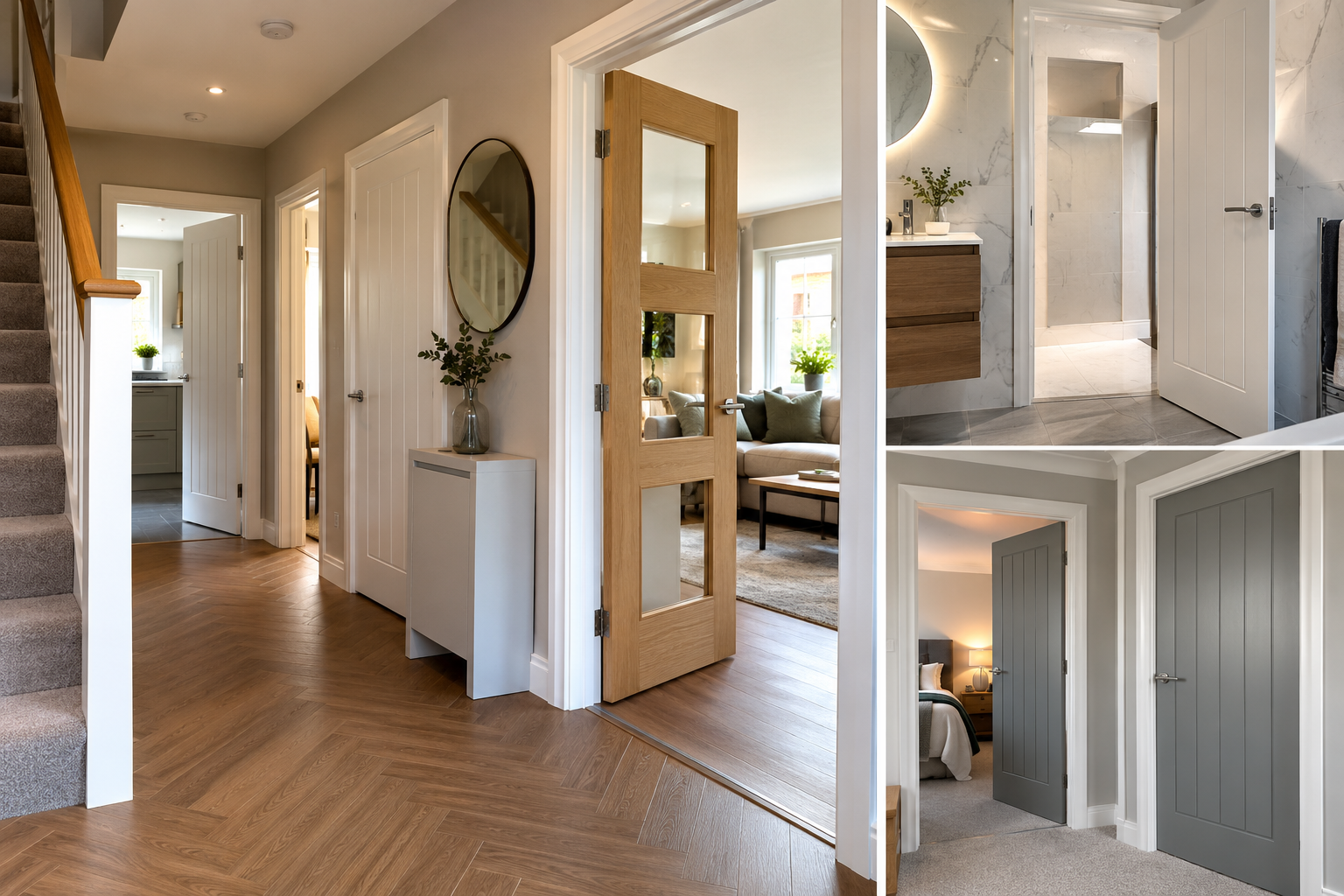
Doors set the tone of a hallway. Old hollow doors, dark finishes that no longer suit the rooms and handles that look tired can date a home even after the walls have been painted. New doors change the look of a hallway at once, because they run through the whole house.
This is a matter of taste, not a fault. Even so, it is a valid reason to replace doors. If you plan to sell or to refresh the home, matching modern doors give a cleaner and more finished result than a mix of old and new.
Mismatched doors after a renovation
Renovations often leave a mix of doors. A new extension may have new doors while older rooms keep the originals. A kitchen or bathroom refit may change one door and leave the rest behind. The result can look unfinished, even when each door on its own is in fair condition.
Replacing the remaining doors brings the house back to one style. It also brings the handles, hinges and finish into line. That consistency matters most in hallways, where several doors are seen together.
Repair or replace, how to decide
Repair suits a single small fault. A loose hinge, a latch that needs adjustment and a small chip can often be fixed without a new door. Replacement suits a door that has more than one fault, a door that keeps failing after repair and a door that no longer fits its frame.
Cost is part of the decision, but time matters too. Repeated callouts for the same door can cost more in time and disruption than one replacement. If you are unsure, ask during a free home measure. A fitter can check the door and the frame and give a clear view of which route makes sense.
It is also worth knowing that you do not always need a new frame. Read our guide to replacing doors without replacing frames to see when the existing frame can stay in place.
What a full house replacement involves
A full house replacement starts with a free home measure. Each opening is measured, each frame is checked and the door style and finish are agreed for the whole house. Doors are then supplied and fitted by one team, which keeps the finish consistent from room to room.
Supply and fit includes doors, frames, architraves, locks, handles and hinges. Most full house fits are finished in a single day. East Coast Doors is based in Julianstown, Co. Meath, has been fitting doors since 2020 and works with its own fitting team in Dublin, Meath, Louth, Wicklow and Kildare.
For costs, read our internal door fitting cost guide. For the service itself, see our internal door replacement service page.
Call 083 814 7923 to book your free home measure.